
TL;DR
- 88% of marketers use AI daily, but only 6% have fully embedded it into their workflows — the gap between adoption and execution is the largest in marketing history.
- ChatGPT is a force multiplier, not a replacement. Output quality depends entirely on input quality — role, context, task, format, and constraints in every prompt.
- Custom GPTs are the unlock most teams miss. Building persistent, brand-trained assistants eliminates repetitive setup and is the bridge between ad-hoc prompting and scalable AI workflows.
- No single AI tool wins every task. ChatGPT leads on speed and versatility, Claude on long-form quality, and Gemini on Google-ecosystem integration. Professional teams use two or three.
- Measure three tiers, not one. Teams that track only time saved incentivize volume over impact. Add quality metrics (edit rate, voice consistency) and performance metrics (traffic, conversions) to see the full picture.
According to a SurveyMonkey report, 88% of marketers now use AI in their daily workflows. But here’s the number that should actually get your attention: only 6% have fully embedded AI into their processes, per the Supermetrics 2026 Marketing Data Report. That leaves 82% of marketing teams stuck using ChatGPT for one-off tasks without a defined strategy, measurement system, or even a shared understanding of what “good” looks like.
The result? More content, not better marketing. Teams are cranking out drafts faster than ever while struggling to connect any of it to results. If you’ve felt that tension — the pressure to adopt ChatGPT paired with nagging uncertainty about whether you’re doing it right — you’re in good company.
This guide isn’t another prompt list. It’s a practical framework for using ChatGPT for marketing in a way that actually compounds: the right mental model, the highest-impact use cases, the prompting skills that separate useful output from generic filler, and the advanced workflows most guides skip entirely.
What ChatGPT Actually Does (and Doesn’t Do) for Marketers
ChatGPT is a large language model. It predicts and generates text based on patterns learned from massive datasets. It is not a marketing platform, not a search engine, and not a database. It doesn’t “know” your customers, your brand, or your quarterly goals unless you tell it.
What it excels at is transforming structured inputs into useful marketing outputs. Give it a clear brief — audience, tone, goal, format, constraints — and it can produce solid first drafts, brainstorm angles you hadn’t considered, repurpose a single piece of content across formats, and handle pattern-based tasks like writing subject line variations or clustering keywords.
What it can’t do matters just as much. ChatGPT doesn’t access live data reliably, can’t replace brand strategy, and doesn’t guarantee accuracy — it will confidently present fabricated statistics or outdated claims if you don’t verify its output. And it has no taste. It won’t tell you that your campaign concept is boring or that your messaging conflicts with what you published last quarter.
The principle that governs everything: garbage in, garbage out. The marketers getting real value from ChatGPT aren’t the ones with access to secret prompts — they’re the ones who’ve learned to give the tool what it needs to perform. Understanding ChatGPT marketing limitations upfront saves you from the two most common traps: over-reliance (publishing unedited AI output) and under-utilization (dismissing the tool after a few underwhelming experiments).
The 7 Highest-Impact Marketing Use Cases (with Prompt Examples)
These seven use cases are ranked by the combination of time saved and output quality — the areas where ChatGPT consistently delivers results worth building into your process.
1. Content Creation
Generate blog outlines, social captions, product descriptions, and repurpose long-form pieces across formats. Use it for structure and speed, not as a replacement for original thinking.
Prompt: “You’re a content strategist for a B2B SaaS company selling project management software to mid-market teams. Create a detailed blog outline for ‘how to run more productive sprint retrospectives.’ Include 5 H2 sections, 2-3 H3s under each, and a suggested hook. Target audience: engineering managers, 1-2 years in role.”
2. Email Marketing
A/B test subject lines, drip sequences, re-engagement emails for different segments. One prompt can generate a full five-email nurture sequence that would take an hour to draft manually.
Prompt: “Write a 4-email welcome sequence for a DTC skincare brand. Audience: women 28-40 who signed up via a skin-type quiz. Brand voice: warm, knowledgeable, not clinical. Email 1: welcome + results. Email 2: product education. Email 3: social proof. Email 4: first-purchase offer. Under 180 words each.”
3. SEO
Cluster keywords by intent, draft meta descriptions at scale, identify content gaps based on competitor URLs. ChatGPT for SEO accelerates interpretation of data your tools already collect.
Prompt: “Here are 40 keywords related to ‘project management software.’ Group them by search intent (informational, navigational, commercial, transactional). For each cluster, suggest one content piece. Output as a table: Cluster Name | Intent | Keywords | Suggested Content.”
4. Ad Copy
Ten Google Ads headline variations or five Facebook ad hooks — ChatGPT iterates through benefit-driven hooks, urgency triggers, and social proof framing faster than any copywriter working alone.
Prompt: “Write 8 Google Ads headlines (max 30 chars) and 4 descriptions (max 90 chars) for a time-tracking app targeting freelance designers. Pain points: losing billable hours, messy invoicing, scope creep. Tone: direct, no jargon.”
5. Market Research
Feed it survey results, competitor copy, or industry reports and it organizes messy inputs into actionable frameworks like customer personas or competitive messaging maps surprisingly well.
Prompt: “Based on these three competitor landing pages [paste copy], identify for each: primary value proposition, target audience signals, emotional appeals, key differentiators. Then identify messaging gaps none of them address.”
6. Campaign Planning
Give it constraints — channels, timeline, goals — and it produces a 30-day content calendar, multichannel brief, or launch timeline you can refine rather than build from scratch.
Prompt: “Create a 30-day social media calendar for a fitness app launching a group challenge feature. Platforms: Instagram, TikTok, LinkedIn. Mix: 40% educational, 30% UGC, 20% promotional, 10% behind-the-scenes. Include post type, platform, caption concept, and CTA per day.”
7. Customer Engagement
FAQ sections, review response templates, chatbot scripts — high-volume, pattern-heavy tasks where ChatGPT saves time without sacrificing quality, as long as a human reviews for accuracy.
Prompt: “Write 10 FAQ entries for an online furniture store’s ‘Shipping & Returns’ page. Audience: first-time buyers nervous about ordering online. Tone: reassuring, straightforward. Real questions only — no corporate-speak. Answers under 60 words each.”
Use Case Summary
| Use Case | Typical Time Saved | Difficulty | Best For |
|---|---|---|---|
| Content Creation | 40–60% per draft | Low | Solo marketers, content teams scaling output |
| Email Marketing | 50–70% per sequence | Low | DTC brands, B2B nurture workflows |
| SEO | 30–50% on clustering/metas | Medium | SEO specialists, content strategists |
| Ad Copy | 60–75% per variation set | Low | Performance marketers, agencies |
| Market Research | 40–60% on synthesis tasks | Medium | Brand strategists, competitive intelligence |
| Campaign Planning | 50–65% on initial frameworks | Medium | Marketing managers, social media leads |
| Customer Engagement | 50–70% on templated responses | Low | Support teams, community managers |
Prompt Engineering for Marketers — How to Get Output Worth Using
Copying prompts from a list will only get you so far. The marketers who extract consistent value from ChatGPT have learned a transferable skill: prompt engineering. Not in the computer science sense — in the practical, “I need this output to be usable without three rounds of revisions” sense.
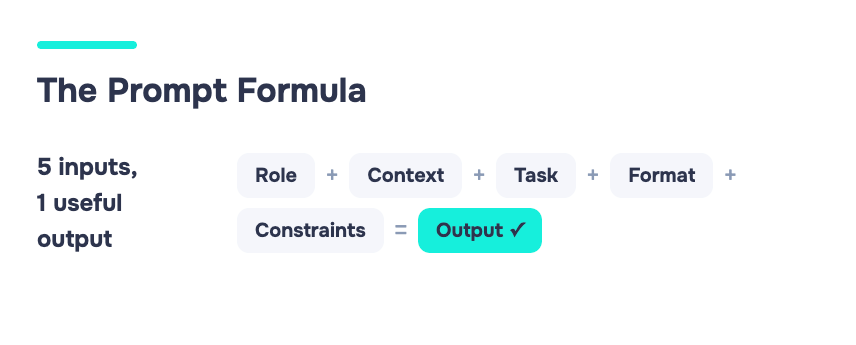
The formula: Role + Context + Task + Format + Constraints = Useful Output
Why do you need it?
- Role tells ChatGPT who it’s being — “senior email copywriter for a luxury hotel chain” produces different output than a bare request.
- Context gives it the background: audience, product, campaign stage.
- Task is the specific deliverable.
- Format specifies structure.
- Constraints set boundaries — word count, tone, what to avoid.
The most frequent failure is vagueness. Other common mistakes: no brand context (every output sounds like the same LinkedIn influencer), treating the first draft as final, and over-constraining in one prompt instead of building up through a sequence.
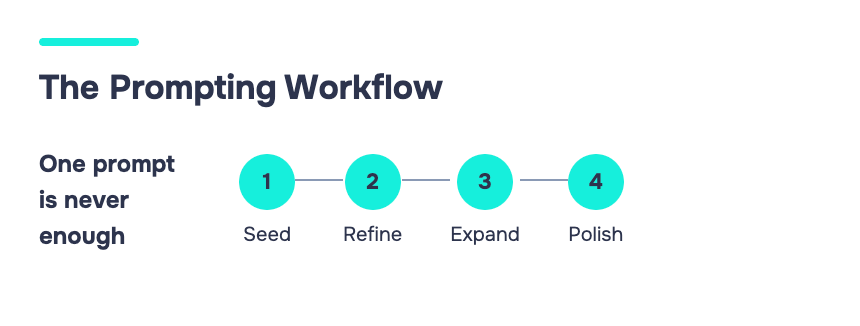
The more reliable workflow: Seed a rough draft, Refine weak sections, Expand key points, Polish for voice. Each stage takes minutes, not hours.
Generic output is the number-one complaint about ChatGPT-generated content. The fix is brand voice calibration — provide examples of your existing content, use specific descriptors (“conversational but authoritative, like talking to a smart colleague”), upload brand guidelines. Once you find ChatGPT marketing prompts that consistently produce quality output, save them in a shared prompt library with variables for audience, product, and goal. That’s the shift from ad-hoc experimentation to a repeatable system.
Building Custom GPTs for Repeatable Marketing Workflows
Custom GPTs are persistent, pre-configured versions of ChatGPT that remember your instructions, brand context, and preferred output formats across sessions. You build that context once and reuse it indefinitely — no re-explaining your brand voice every time you open a new chat.
Almost no top-ranking article for “ChatGPT for marketing” covers Custom GPTs in depth, which is surprising — they’re the bridge between one-off prompting and integrated workflows.
Practical examples: a Brand Voice Enforcer rewrites any draft to match your guidelines. A Content Brief Generator produces structured briefs from a keyword and audience. A Campaign Debrief Summarizer turns performance data into executive summaries.
To build one: navigate to “Create a GPT,” write clear instructions, upload knowledge files (brand guidelines, tone docs, past campaigns), set conversation starters, and configure Actions if you want external tool integrations. The rule of thumb for when to use a Custom GPT versus a regular chat: if you’ve copy-pasted the same setup instructions more than three times, build one.
Think of Custom GPTs as the moment ChatGPT stops being a tool you visit and starts being part of how your team actually works. The most advanced AI marketing teams document 75% of their use cases — Custom GPTs are documentation in action.
ChatGPT vs. Claude vs. Gemini — Choosing the Right AI for Each Marketing Task
ChatGPT isn’t the only option, and treating it as the default for every marketing task means paying for a tool that’s doing a fraction of what it could.
| Task | Best Tool | Why |
|---|---|---|
| Long-form blog drafts | Claude | Stronger first-draft quality; larger context window |
| Ad copy variations | ChatGPT | Faster iteration; more usable variations per prompt |
| Social media content | ChatGPT | Best plugin ecosystem; DALL-E image generation |
| Email sequences | ChatGPT or Claude | Comparable; edge goes to whichever has your brand voice calibrated |
| SEO keyword clustering | ChatGPT | Strong pattern recognition for intent classification |
| Data reporting & dashboards | Gemini | Native Google Analytics, Sheets, and Looker integration |
| Competitive analysis | Claude | Handles long documents; more nuanced synthesis |
| Campaign briefs | Claude | Better at structured, multi-section outputs |
| Google Ads management | Gemini | Direct Google Ads integration |
| Visual marketing concepts | ChatGPT | Built-in DALL-E; multimodal input |
| Research synthesis | Claude | Processes lengthy reports with less degradation |
ChatGPT is the most versatile all-rounder — best for speed, variety, and ecosystem breadth. Claude excels at long-form and nuanced brand voice work. Gemini wins when your stack lives in Google Workspace.
Most professional teams use two of the three: a primary for daily work, a secondary for tasks where the primary falls short. Rather than asking “which AI is best for marketing,” ask “what’s my biggest bottleneck?” Then match the tool to the constraint.
The Risks You Can’t Ignore — Limitations, Compliance, and Quality Control
Every guide that says “always fact-check your output” and moves on is doing you a disservice. The risks are specific and manageable — if you take them seriously.
Hallucination. ChatGPT fabricates statistics, invents citations, and presents outdated claims as fact. Every factual claim in AI-generated content needs verification against a primary source. No exceptions.
Brand voice drift. Without calibration, ChatGPT defaults to a generic, mildly enthusiastic tone that sounds like every other AI-generated piece online. Maintain a living brand voice document, use Custom GPTs with voice calibration baked in, and add an editorial review step that specifically checks tone.
Legal and compliance risk. IP ownership of AI-generated content remains legally ambiguous. Disclosure requirements are emerging — the FTC has signaled AI-generated advertising may require transparency. For regulated industries, AI-generated claims still need the same substantiation as human-written copy.
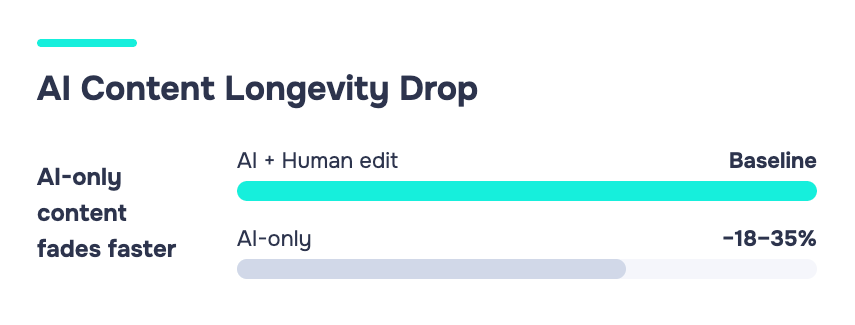
SEO risk. Google doesn’t penalize AI-generated content, but it does penalize thin, unhelpful content regardless of origin. AI-only posts show 18–35% lower ranking longevity compared to human-edited content. The fix is an editorial layer that prioritizes depth and originality over speed.
Build a governance policy around three elements: approved use cases, quality standards (what “ready to publish” means for AI-assisted content), and disclosure rules. Document it, share it, update it quarterly.
ChatGPT Marketing Automation: Workflows That Actually Scale
Knowing how to prompt ChatGPT is step one. Connecting it to the rest of your marketing stack is where time savings compound from minutes per task to hours per week.
Automation platforms like Zapier and Make let you connect ChatGPT to hundreds of marketing tools without code. A trigger fires in one app, data passes to ChatGPT via the API, and the output routes to a destination app. Here are three workflows worth building.
Weekly social calendars from content pillars. A Google Sheet of content pillars updates Monday → Zapier sends each to ChatGPT → five platform-specific post concepts (hook, caption, CTA) populate a Notion board for review. Two hours of weekly work becomes fifteen minutes.
Reviews into marketing assets. A new 4- or 5-star review appears on Trustpilot or G2 → ChatGPT generates a social proof snippet, testimonial card caption, and email quote block → drafts land in Slack for one-click approval.
Brief-to-draft content pipeline. A content brief is marked “approved” in your PM tool → brief details pass to ChatGPT → structured first draft populates your CMS as an unpublished post, tagged for editorial review.
For teams with developer support, the ChatGPT API enables deeper integration: Slack bots that summarize campaign performance, Chrome extensions that draft personalized outreach from LinkedIn profiles, dashboards that auto-generate analytics narratives. API usage is billed per token — roughly $0.01–0.03 per output using GPT-4o — so set spending caps before scaling. And start with one workflow before automating five; without established review processes, you risk compounding quality problems across every channel at once.
Measuring ChatGPT Marketing ROI: A Three-Tier Framework
The ROI from ChatGPT is real — McKinsey research shows AI-driven campaigns deliver 22% higher ROI and 32% more conversions. But 51% of marketers can’t track AI ROI at all. That’s a framework problem, not a data problem. Most teams measure speed because it’s easy, then stop there.
A practical framework tracks three tiers. Most teams stop at Tier 1 — but efficiency metrics alone can justify making things worse faster.
Tier 1 — Efficiency: Hours saved per content piece, prompts-to-publish ratio, cost per asset before and after. Establish a pre-AI baseline before rolling out any workflow — without it, you’ll have estimates instead of evidence.
Tier 2 — Quality: Human edit rate (what % of output needs substantive revision), brand voice consistency scores, ranking longevity of AI-assisted versus manually created content. Speed without quality is just faster failure.
Tier 3 — Performance: Organic traffic, conversion rates, and engagement metrics for AI-assisted content versus pre-AI benchmarks. Pipeline attribution — revenue traced to ChatGPT-created campaigns. If your CRM tracks content touchpoints, the data already exists; segment by AI-assisted versus manual.
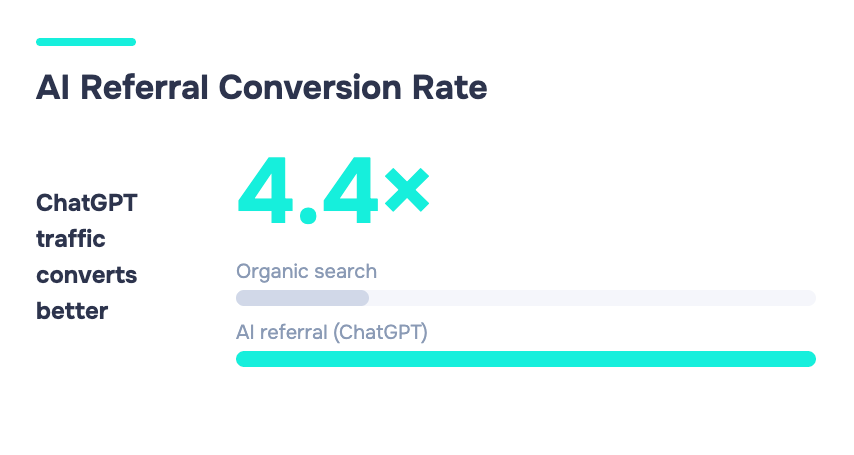
A fourth layer for advanced teams: AI visibility metrics. Track ChatGPT referral traffic (look for “ChatGPT-User” in server logs), brand mention frequency in AI-generated responses, and citation rates across platforms. With AI-referred traffic converting at 4.4× traditional organic and companies like Tally.so attributing 25% of new signups to ChatGPT referrals, this tier is quickly becoming the one that separates forward-thinking teams from the rest.
From Prompts to Performance — Making AI Work for Your Marketing Goals
The progression is straightforward: one-off prompts → Custom GPTs → automated workflows → measured outcomes. Each stage compounds the value of the last. The teams ahead of the curve aren’t the ones writing the cleverest prompts — they’re the ones building systems with documented use cases, trained team members, defined KPIs, and governance frameworks that let them move fast without breaking things.
One more dimension worth flagging. ChatGPT isn’t just a tool you use — it’s increasingly a channel where your brand needs to appear. With 2.5 billion daily prompts and AI-referred traffic converting at 4.4× the rate of traditional organic search, brands that structure content for AI discoverability — clear heading hierarchies, verifiable data, FAQ-rich pages, fresh publication dates — are building a compounding advantage. Fewer than 12% of marketing teams have a documented strategy for this.
For teams ready to move beyond DIY prompting, the next step is an AI-informed marketing engine — one that uses AI to create content and ensures that content earns visibility across both search engines and AI platforms. Working with a team that understands both AI workflows and search strategy is what turns experimentation into results.